

sharing is caring
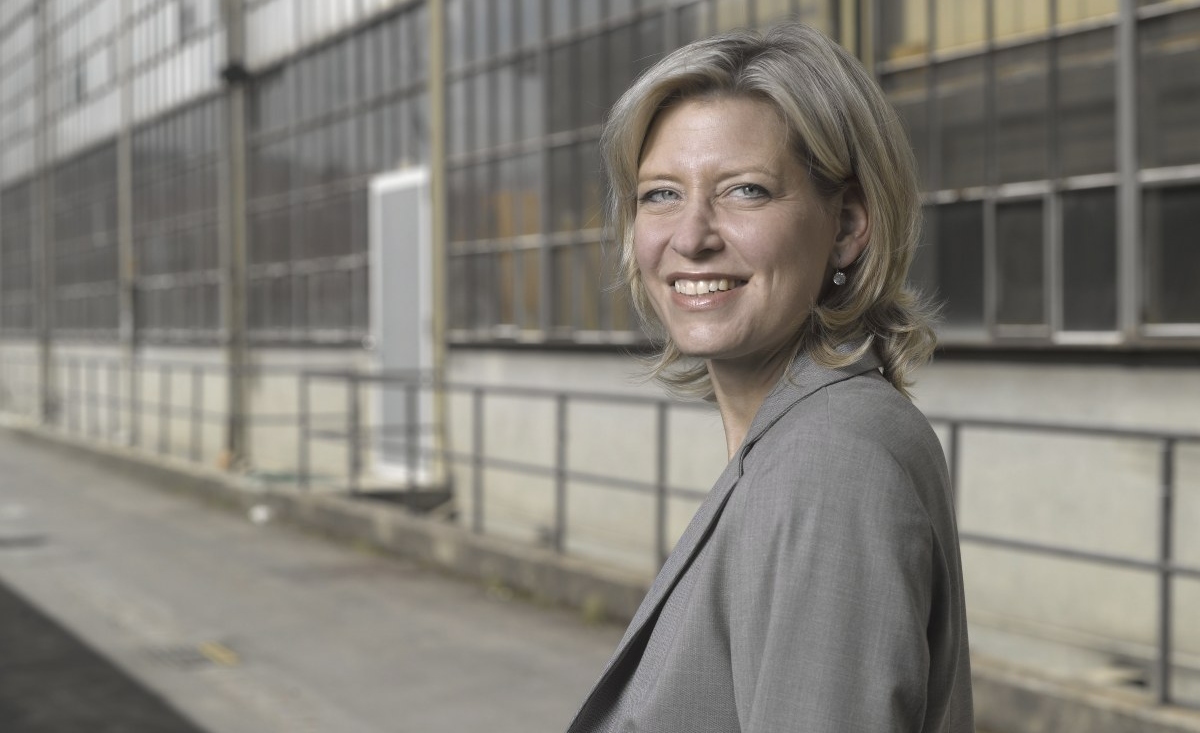
Today, we are excited to meet Dr. Eva Bilhuber Galli, founder of human facts ag. This Zurich-based company offers services that focus on the human side of management and the development of human strengths to companies, teams and individuals.
Dear Eva, can you please explain to our readers what you mean by “the human side of management” and why it is so important to you?
The human side of management addresses what is happening between people in business. Only when the relationship between clients, employees and partner is one of trust, shared values and a sense of belonging can the business thrive sustainably and successfully. Human relationships, however do not occur automatically just by a high quantity of interaction between people. In our todays’ social media world businesses striving for high connectivity seem currently underestimating massively the fact that increased digital interaction is not accompanied automatically with an increase in relationship quality. In fact, today more than 50% of customers change the brand due to a disappointing human experience in customer interaction. Digitization has massively increased the customer’s expectations towards the human factor of customer care. I am convinced that managers who understand businesses as a network of relationships between partners, and who shape them not only on material but also human values, will succeed.

We love your company statement: human facts – because business results are generated by human beings. This is so true. Why however, is this fact so rarely seen and realised by companies?
We as a society believe that emotions or human values, e.g. helpfulness, do not belong into our daily business environment, since they can hinder efficiency. In essence, many believe that humanity and economical action are incompatible. During my career I have experienced first hand that when numbers of the business have not been satisfactorily, human topics have immediately been deferred from the agenda. It was always hard work to re-establish trust, motivation and meaning, the human side of business, after such downturn phases again. This thinking of incompatibility is merely the result of an error in reasoning, that’s why I am working with companies and individuals to bridge this gap.
What are the consequences of this conflicting relationship between economic efficiency and humanity?
The consequence is that we see clear splitting behavior: At home I am a human individual and humanity is allowed. At work however, I need to be efficient and therefore leave my human personality at home. The only exception to this is in the context of corporate social responsibility programmes. As a result, companies are becoming increasingly soulless, inhumane with a meaningless work environment. This is a highly worrysome development, which we need to question urgently. It is completely absurd insofar, as efficiency and economy are principles inherent to our primal humanity. In its original meaning it means conserving resources and large parts of our body and mind work according to this principle. I also honestly do not know anyone who thinks that working inefficiently is great fun. Economics and humanity - that’s not only about how to combine them, it’s about acknowledging their interdependency. Nowadays we know that business success depends on trust, cooperation, learning and innovation. These are foundational human strengths. It is time to have the courage to acknowledge these findings also in business management and to place these insights at the centre of the corporate strategic agenda.
In your opinion, what makes a sustainable corporate culture nowadays?
Today’s corporations are increasingly confronted with dynamic change and corporate culture becomes an anchor for identification and trust in a business – for customers, employees, shareholders, partners and society alike. In my opinion, the purpose of a business is the most important and significant pillar, which outlines the reason of existence and the soul of a company. It expresses what the company wants to “give” to the world. We often forget that companies exist to serve people and society and not the other way around. Phrases like “We want to be the number one” are witness to this ancient world thinking. On the other hand, many stakeholders can identify with AirBnB's “Belonging everywhere” because social added value for many shall be created. In my experience, companies are therefore well advised to formulate their purpose in dialogue and together with their various stakeholders. It’s all about the process where the journey becomes the goal. Apart from a common purpose, I believe a corporate culture should include all the values that contribute to sustainable and good partnerships and trust, such as respect, transparency and integrity. It’s not enough to simply write them on marble panels, but to jointly define these values in a continuous dialogue process with employees and other stakeholders.
We at MA people are specialised in crafting innovative hotel concepts and brands: what makes a hotel experience truly outstanding or you personally?
Of course humanity in dealing with people - how could it be otherwise?! Above all, I find it’s the small, spontaneous human gestures that are not rehearsed that impress me the most. It’s what makes me feel welcomed as a person and not just as a paying guest. And it’s not only about dealing with me as a customer. I also want to feel this humanity in the way the employees interact with each other. Recently during a restaurant visit for example, another service staff came to settle my bill than the one who brought the food earlier. She informed me immediately that she would give her colleague the tip I gave to her. I was very impressed as it showed me that respect and integrity are truly lived by the individuals at this place. Wherever authentic humanity prevails, I immediately feel at home. No matter which star rating the hotel has or whether I am on a leisure or business trip.
About Dr. Eva Bilhuber Galli:
Since 2009 Dr. Eva Bilhuber Galli leads her consulting firm human facts ag in Zurich and St. Gallen with focus on transformation and multi-stakeholder engagement. Eva’s commitment is motivated by the belief that efficiency is a human principle and can be reconciled with humanity. She regularly publishes in the journal Changement! of the German Handelsblatt publishing house. If time allows, you’ll find her mountain-biking with friends, writing down her latest ideas or enjoying a cappuccino in the Italian sunshine.

 ke time for prosecco ke it happenke it meaningfulke good coffeeke it matterke funny jokeske it kindke it simpleke it count
Sign up for the MAp newsletter for practical insights on hotel branding, marketing, and sustainability, plus fresh thinking from our projects and new tools from our sustainability platform. Let’s move #onwards together.